IMG_6832 (4)About Dr Cathy Betoin

Every meaningful journey begins by noticing what has been overlooked.

Hi, I’m Dr Cathy Betoin.

I began my career as a teacher before training as a Clinical Psychologist, and for more than 30 years I have worked with children, families and professionals across health, education and community settings.

Throughout those years, I kept coming back to the same puzzle.

Again and again, I met children, parents, carers and professionals who were trying incredibly hard. There was often plenty of knowledge about behaviour, mental health, development, parenting or professional practice — and yet people could still feel overwhelmed, blamed, disconnected or stuck.  I also recognised those experiences myself

I found myself asking:

Why are so many children, families and professionals continuing to struggle, despite our growing knowledge about mental health and wellbeing?   And why am I finding parenting and the professional roles so difficult in spite of so much training?

A Missing Piece

So I decided to go to back to the research to understand that I had been trained in to see if I had missed something.   What I discovered shocked me because decades and decades of research were pointing to the importance of the adult role in the wellbeing of children

Yet that was not where the focus of so much of our child centred efforts to help children was placed. 


Adults understanding and skills have a huge role to play in the wellbeing of children.

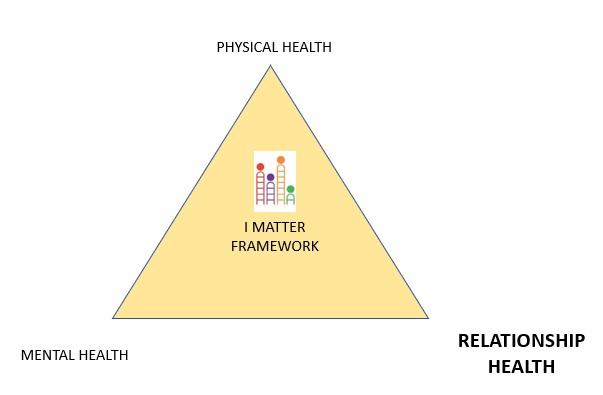
                         Two Triangles:   The Missing LinksScreenshot 2025-04-05 102714-RH-triangle

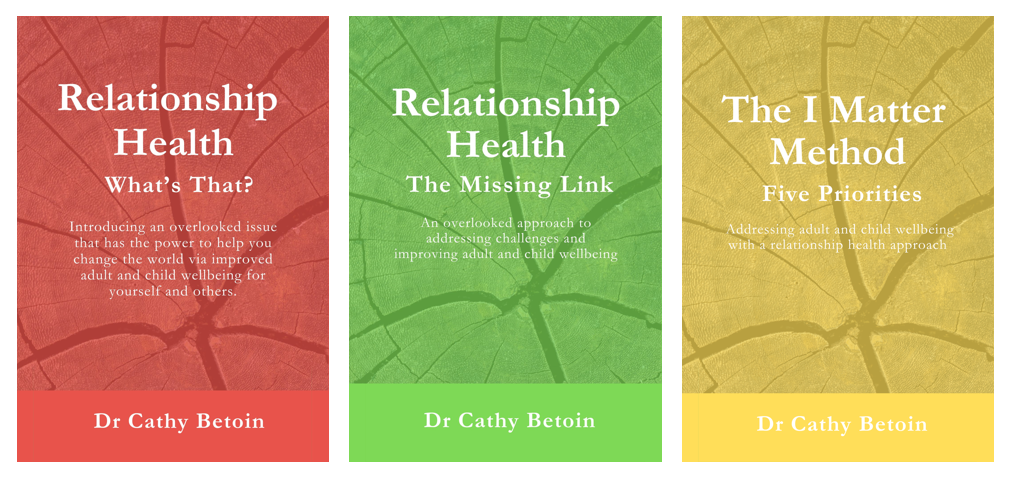
Screenshot-2023-11-11-070339-trilogy-1010w-478h  These books are now published and ready for you!

From Mental Health to Relationship Health

What the research clearly pointed to was that the adult role was vital in the the wellbeing of the child.  My development was vital to the wellbeing of my children and family and my clients.  This was the 'I Matter' piece.      

Since 2010 I have been developing the I Matter Framework as a practical way of making these ideas easier to understand and apply.

The aim was not to create another set of techniques telling people what they should do.

It was to help people become more confident at understanding what the research is telling us and noticing what may be happening beneath behaviour and difficulty — including the influence of stress, development, patterns of interaction, connection and disconnection — and their own role - so as to see more clearly the part each of us can play in creating positive change.

I think we all know that relationships shape how we develop.  They influence how safe we feel, how we respond to stress, how we learn, how we communicate and how well we are able to cope with life's challenges.

Yet although we talk a great deal about physical health and increasingly about mental health, we have far less shared language for understanding and strengthening relationships

That began to feel like an important missing piece.

I became convinced that many of the ideas people were encountering separately — through psychology, neuroscience, attachment, child development, trauma, education, parenting and wellbeing — needed bringing together in a form that people could actually use in everyday life.

In 2020, I searched specifically for the term Relationship Health, expecting to find an established field of books, courses and practitioners.

Instead, I was surprised by how little I found organised around that language.

For me, that helped name something I had been noticing for many years.

Perhaps we have been missing an important pillar of wellbeing?  

The I Matter Framework

Today, the I Matter work brings together books, online learning, educational consultation and community partnerships.   I think of it as offering professionals and parents a way of understanding this overlooked issue of relationship health practice.

I Matter is designed to help people develop:

  • a clearer understanding of relationships, behaviour, development and stress
  • a shared language for thinking about challenging situations
  • greater confidence in their own role and responses
  • practical skills for strengthening relationships
  • an understanding that caring for ourselves and caring for our relationships are deeply connected

The same underlying principles can be useful in many different settings — in families, schools, health services, workplaces and communities.

The starting point may be different, but the question is often similar:

What becomes possible when we understand relationships better - especially our own role?

Two Triangles: The Missing Links

My books explore some of these ideas in an accessible way and introduce the foundations of a Relationship Health and I Matter informed approach.

They are part of a wider learning journey designed to help adults and young people understand themselves, understand one another and build stronger foundations for the relationships that matter.

Looking Ahead

My vision is ambitious, but simple:

To help make Relationship Health part of everyday conversations about wellbeing.

I would love to see a future in which learning about relationships is considered just as important as learning about physical health or mental health.

A future in which children grow up with more understanding of themselves and others.

A future in which parents and carers feel better equipped for the challenges of family life with their children and with each other as partners.

A future in which professionals across health, education and community services have a shared language that helps them work together.

And a future in which organisations and communities recognise that relationship health is not simply a private matter — it is part of the foundation of individual and collective wellbeing.

Because when relationships become healthier, everything else has a better chance of flourishing.

Our Vision and Mission

Our mission is to help grow understanding and practical skills for Relationship Health.

We want to support adults and young people to develop the awareness, understanding and confidence needed to contribute positively to their personal relationships, professional relationships and the wider communi

ties and environments in which they live.

Connect. Contribute. Learn. Repair.

And perhaps, over time, help make Relationship Health something we all know how to talk about.


We aim to equip professionals and parents with more understanding and skills for relationship health in the world - assisting adults and young people on developing the awareness and insights needed to enjoy their own personal and professional lives, and move forward to happier and healthier families, relationships and communities

We are working with..

KPCN-

KICClogo


YOU?

Our Values

Capture-fundamentals

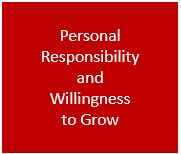
Capture-resp

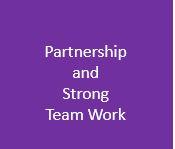
Capture-pers

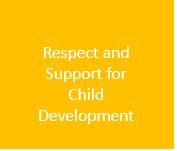
Capture-child