The I Matter Relationship Health Full Community Learning System
In your Community - Get Started - Learn it - Live it - Support Others
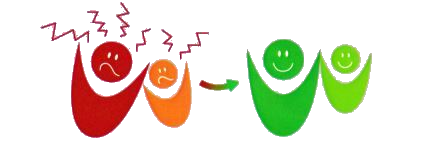
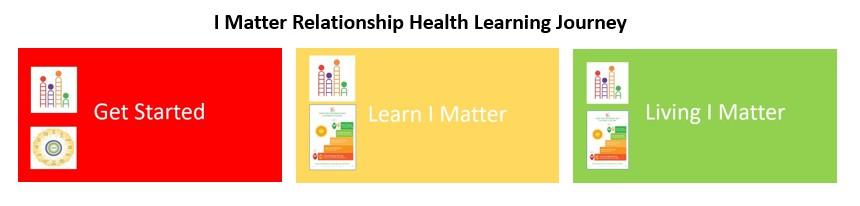
The I Matter Learning Journey introduces individuals and communities to the language of relationship health and its importance in the wellbeing and development of adults and children. It supports a process of progressing from entry level understanding to deeper, supported practice.
I Matter Training is for:
✔ Professionals
✔ Individuals, adult-adult and parents & carers
✔ Practitioners who want to help others
The above is held together via a network of organisations with specific and discrete roles
We aim to create opportunities for a deeper but practical look at the conclusions of decades of research evidence. A key goal is to support more joined up-thinking, helping professionals and non-professionals to work better together.
The I Matter System Map
Progressing a shared model of roles, boundaries, and flow
The I Matter system aims to support relationship health psychoeducation through local and networked learning.
Different organisations and individuals play distinct roles — none of which replaces services or clinical intervention.
This page aims to explains those roles and the logic of how the system works together addressing the question of
-
Who is involved?
-
What does each role do?
-
How do people enter and move through the system?
“I Matter Learning is delivered through two organisations with distinct roles — one focused on training and capacity building, the other on reflective tools and optional consultation support.”
This map describes how you can think about the way in which relationship health learning is introduced, accessed, supported, and sustained through a community of organisations and practitioners without overloading any single part of the system.
Here are 10 Key Elements
1. Motivated Personal Learners - for Personal Wellbeing or Parenting and Caring
2. Motivated Professional Learners - In education or health or community roles
3. Commissioners and grant awarding bodies
4. Primary Care Services
5. Schools and Nurseries
6. Community Services
7. Locality Hubs
8. I Matter Training
9. Lead Professionals
10. Families and Individuals via organisations
Each one will be explored in more depth below
1. Motivated Personal Learners - Personal Wellbeing, Parenting-Caring
Primary role
Taking responsibility for one's own personal and parenting-caring skills development and taking action to move things forward.
What happens here
-
Reflection on personal learning priorities
-
Conversation with personal and family networks
-
Conversation with local services and providers
-
Decision about funding own learning
- Decisions about applying for funding support
What personal learners do not hold
-
No automatic entitlement to joined up learning support
Boundary statement
Individuals can decide to progress their own skills development and conversations but do not have control over the provision of local services
You can:
Check out Personal Learning Options
Express an interest
2. Motivated Professional Learners - relationship health and I Matter informed practice
Primary role
Taking responsibility for one's own professional skills development and taking action to move things forward.
What happens here
-
Reflection on professional learning priorities
-
Conversations with local teams
-
Conversation with local services and providers and clients andfamilies
-
Decisions about funding own learning
-
Decisions about applying for funding support
What professional learnings do not hold
- No automatic entitlement to funding for training or to a joined up locality based approach
Boundary statement
Individual professionals can decide to progress their own skills development and conversations but do not have control over the provision of local services
You can:
Check out Professional Learning Options
Express an Interest
3. Commissioning and Grant Providing Organisations
Primary role
Commissioners and grant awarding bodies view locality needs through a system overview with knowledge of what is already present and working well and understanding of the gaps
What happens here
-
Decide to become informed!
-
Reflection on locality priorities as a system
-
Conversation with local providers
-
Supportive funding to progress professional training
-
Assistance to funding for targetted needs for families
What commissioners and grant providers do not hold
-
No case management
Boundary statement
Commissioners and grant provides support the skills development of the locality system they do not hold case management
You can:
Check out Professional and Personal Learning Options
Express an Interest
4. Primary Care: The Invitation & Sense-Making Space
Primary role
Primary care provides a safe, legitimising entry point into conversations about relationship health with local professionals and families
To include GP's, Health visitors.
What happens here
-
Normalising difficulty in relationships
-
Introducing shared language (I Matter concepts)
-
Helping people name concerns and priorities
-
Brief orientation conversations
-
Early signposting
- Ensuring that families access other relevant opportunities
What primary care does not hold
-
No paid learning transactions
-
No long-term learning pathways
-
No ownership of learning data
-
No expectation to manage ongoing complexity
Boundary statement
Primary care opens conversations; it does not own learning journeys.
You can:
Check out Professional and Personal Learning Options
Express an Interest
5. Schools: The Learning Access & Community Pathway
Primary role
Schools and Nurseries act as a trusted community gateway for parent and carer learning.
What happens here
-
Lead professionals, hosting Get Started workshops (supported by local primary care)
-
Offer option of access to follow-on online learning
- Offer information about access to study support options
-
Communicating costs clearly and transparently
-
Supporting parent engagement at scale
-
Holding short- to medium-term learning data
What schools do not hold
-
Specialist case responsibility
-
Clinical interpretation
-
Responsibility for complex family situations beyond their remit
Boundary statement
Schools host learning pathways, not therapeutic services.
You can:
Check out Professional and Personal Learning Options
Express an Interest
6. Community: The Informed, Complementary Services Pathways
Primary role
Community services provide relationship health informed comlementary services for parent and carer learning.
What happens here
-
Professionals in community services progress relationship health and I Matter informed conversations with young people and families
-
Offer access to a range of complementary services
- Work with primary care and schools to establish needs and develop services
- Participate in the delivery of Locality Hub Community Wheel learning opportuntiies
-
Supporting parent engagement in understanding of relationship health informed practice at scale
What community services do not hold
-
Access to I Matter online learning accounts
-
Provision of Tracker accounts
-
Responsibility for holding complex family situations in isolation
Boundary statement
Community organisations facilitate informed discussion of questions of relationship health and support engagement in learning.
You can:
Check out Professional and Personal Learning Options
Express an Interest
7. Locality Hubs: The Structured Support & Transition Space
Primary role
Locality hubs provide a neutral, non-clinical container for more structured engagement, overseen by Relationship Health Matters CIC
What happens here
-
Opt-in use of priorities consultations
-
Use of digital tools for baseline and follow-up
-
Time-limited, purpose-specific support
-
Coordinated learning for families or professionals
-
Clear consent and data ownership
- Information about other local services that can be helpful
What locality hubs do not hold
-
Open-ended support
-
Crisis management
-
Permanent case ownership
Boundary statement
Locality hubs support reflection and planning, not long-term holding.
You can:
Check out Professional Learning Options
Learn More
8. I Matter Training: Framework, Standards & Capacity Building
Primary role
I Matter Training provides the theoretical foundation, learning infrastructure, and quality assurance for the whole system.
What happens here
-
Online Fundamentals and Deep Dive learning for professionals
-
Lead professional training
-
Study support models and guidance
-
Framework ownership and evolution
-
Standards, ethics, and consistency
-
Escalation design (not delivery)
- Help in setting up locality hubs for delivery of training to families
What I Matter Training does not do
-
Hold individual cases
-
Act as a referral destination for complexity
-
Provide ongoing personalised support by default
-
Replace local capacity
Boundary statement
I Matter Training builds system capacity; it does not become the system.
You can:
Check out Professional Learning Options
Learn More
9. Lead Professionals: The Bridge (Where Capacity Is Built)
Primary role
Lead professionals create local sustainability by holding learning and reflection within their organisation or community.
What happens here
-
Completion of Lead training
- Delivery of responsive workshops using resources (without online)
-
Supporting access to online learning
-
Sometimes providing study support through Fundamentals
-
Facilitating reflective conversations
-
Acting as a first point of learning support
-
Supporting referral to other services when this is appropriate due to additional needs
What leads do not do
-
Replace specialist services
-
Carry responsibility alone
-
Provide unlimited support
Boundary statement
Leads extend the framework locally; they are not a substitute for services.
You can:
Check out Professional Learning Options
Learn More
10. Families & Individuals: Choice-Based Learning Journeys
Primary role
Families and individuals engage as learners, not patients or cases.
What happens here
-
Voluntary engagement
-
Choice about depth and pace
-
Clear expectations of what learning is (and isn’t)
-
Time-limited support options
-
Transparency about costs and commitment
Boundary statement
Engagement is learning-led, not problem-assigned.
You can:
Check out Professional Learning Options
Learn More
11. Overall Flow (how it moves)
-
Motivated personal/professional learners
-
Commissioners/Grant providers → support development of locality hub capacity
-
Primary care → opens the conversation
-
Schools / hubs → provide access to learning
- Community → provide informed complementary services
-
Leads → hold learning for families locally
-
I Matter Training → maintains the framework and quality
No part of the system passes responsibility downwards without consent.
No part of the system absorbs responsibility upwards by default.
12. The Governing Principle
Relationship health is everyone’s business — but no one holds it alone.
This map allows:
-
scalability
-
ethical boundaries
-
clarity in pricing
-
protection of individual and organisation roles
-
and genuine system change
How the I Matter System Works
The I Matter approach helps adults, young people, and organisations improve well-being by understanding and applying the principles of relationship health. It is learning-led, practical, and designed to support meaningful change — without creating dependency or taking on clinical responsibility.
Two organisations, one system
The I Matter system is delivered through two complementary organisations, each with a clearly defined role:
I Matter Training Ltd – Learning and Capacity Building
What it does:
-
Provides the I Matter learning framework
-
Delivers online courses, workshops, and professional training
-
Offers Lead Professional training for local capacity
-
Licenses learning materials and online programmes
-
Maintains quality standards and support resources
Who it’s for:
-
Parents and carers engaging with I Matter learning
-
Professionals seeking structured training
-
Organisations building internal capability
What it does not do:
-
Hold case records
-
Provide therapy or clinical support
-
Manage individual family situations
Plain language:
I Matter Training teaches people how to use the I Matter approach. It builds understanding, skills, and confidence — without providing therapy or case management.
Relationship Health Matters CIC – Reflection and Support Tools
What it does:
-
Provides the Progress Tracker, a secure, non-clinical tool for reflection, goal-setting, and monitoring progress
-
Offers Priorities Consultations to help families, professionals, or organisations focus learning and next steps
-
Licenses trained practitioners to provide structured guidance within local communities
-
Supports local evaluation and insight, without creating clinical records
- Can provide subsidised coaching packages
Who it’s for:
-
Parents or carers who want to track learning progress and set goals
-
Professionals looking for structured consultation tools
-
Local organisations aiming to support reflective learning in their teams
What it does not do:
-
Act as a clinical service
-
Hold safeguarding or case responsibility
-
Replace local services
Plain language:
Relationship Health Matters CIC provides tools and support to help people and teams track progress, set goals,
53 Stramongate
Kendal
La94BH
United Kingdom