Relationship Health and I Matter Informed Education
with Community Partners
Discover how an understanding of Relationship Health can Help You to Help Yourself and Others in Many Roles and Situations
The I Matter Learning Journey
Community as Relationship Health and I Matter Informed Partners
Strengthening Relationship Health in Community Settings
Community based teams are often the first point of contact for individuals and families facing stress, anxiety, behavioural challenges, emotional distress, or relational strain. The quality of relationships — between individutals within families, and across systems — deeply impacts wellbeing and recovery, yet it is rarely named or systematically supported in everyday practice. I Matter Training
The I Matter Framework supports community teams to build confidence, language, and practical insight in relationship health — so professionals and volunteers can support adults and children more effectively, reduce unnecessary escalation, and work in partnership with families and communities. I Matter Training
I Matter Training is not clinical therapy — it is practical understanding and relational confidence that enhances care delivery and supports whole‑person wellbeing. I Matter Training
Why Join as a Community Organisation Partner?
Becoming a partner means:
-
Recognising relationship health as foundational to physical, emotional, and social wellbeing
-
Supporting staff and volunteers with confidence to navigate relational complexity
-
Strengthening team and family and community relationships
-
Building bridges to health and education partners through a shared language
-
Choosing engagement that fits your team’s resources and priorities
Building a Shared Relationship-Health Foundation
Relationship health is a vital part of overall wellbeing. In primary care, supporting families, young people, and individuals to develop reflective understanding of relationships can reduce stress, improve communication, and enhance outcomes.
Our aim is to make it possible for staff and patients to access relationship health and I Matter informed practice, supported by access to the I Matter Learning Journey creating opportunities for reflective learning, joined-up thinking, and shared problem-solving within our practice.
The practice’s role is to enable access and promote engagement, not to deliver individual coaching or therapy. We aim to respond to staff and patients readiness and motivation to learn and build skills
Our Vision for Community Organisations
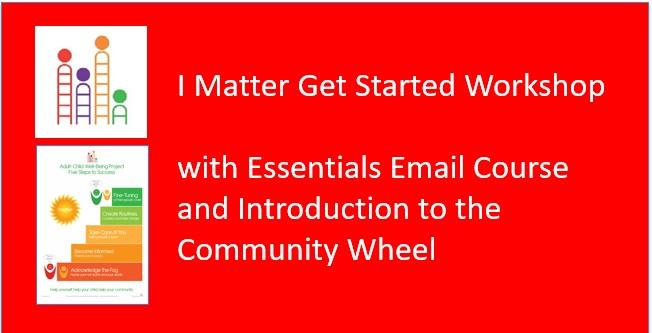
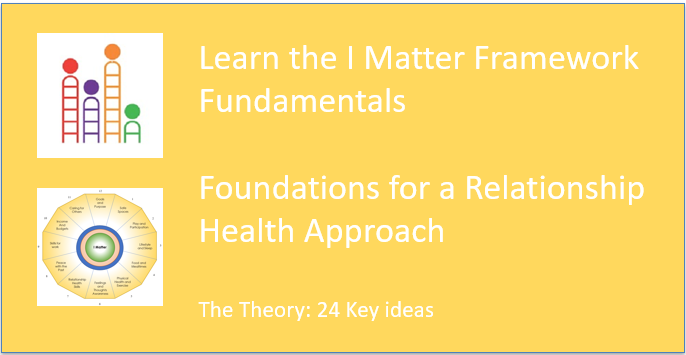
“We aim to ensure that all staff and volunteers can access Phase 1 (Get Started & the Wheel) and Phase 2 (The Fundamentals) of the I Matter Learning Journey. This enables reflective individual learning, shared language, and joined-up thinking across teams, volunteers and families.”
Practice Commitments & Funding
Commitment 1 - Relationship Health and I Matter Informed Staff Team
“We have a growing inhouse team who are relationship health and I Matter Informed”. This team can
-
Informed Professionals Offer: Relationship health and I Matter informed consultations for staff and families and young people:
-
Links offer: support to access more learning opportunities locally and inhouse
-
Leads can Offer: Periodic responsive workshops based that address needs of our own community
-
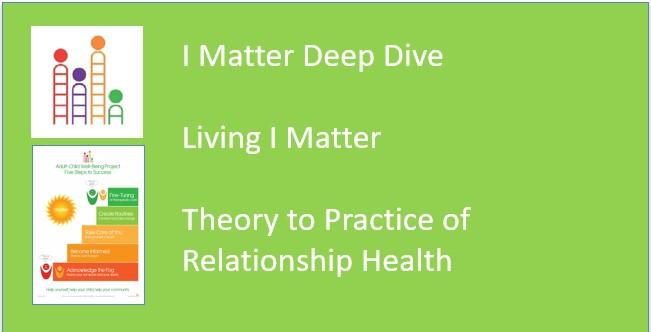
Funding: Named individuals are licensed professionals and organisation funds access to Phase 1 and Phase 3
-
Signposting: Professionals can identify staff and families with readiness to learn more
Commitment 2 – Option for Development of Boundaried Support Pathways (Self-Funded or Subsidised)
“We are developing our ability to provide a programme of provision”. This team can support access to
- Tier 1 - Phase 1 Get Started Workshops: Open to all
-
Tier 2 – Phase 2 Supported Learning: Targetted facilitated self-paced or group learning (staff or patients)
-
Tier 3 – Phase 3 Intensive / Specialist: Individual coaching or specialist referral
Key principle: We funds high reach Tier 1 sessions and self-paced Phase 2 online learning; but optional higher-support access is self-funded or subsidised, keeping workload manageable.
Commitment 3 – Longer term aspirations
“We are developing our ability to provide relationship health and informed practice as an embedded part of all of our practice. Goals are to
- Increase access to more of our community
-
Build understanding and skills of staff, parents and young people
-
See measurable impact on wellbeing for all parties
Indicative Costs
-
Tier 1 - Phase 1 Inhouse Get Started sessions offered each term/half term at £95pp with discounts on bulk booking or inhouse delivery
- Includes 4 x monthly Online wheel sessions then £15pa self funded
- In house wheel sessions offered monthly by staff team - as community building
-
Tier 2 - Phase 2 Targetted - Priorities consultations £100pp + access to self-paced online £347pp or £495 with small group for 4 months
-
Discounts on bulk purchases -Accessed by a handful of patients under organisation license: optional self-funded
- Tier 3 - Phase 3 Extended/Intensive/specialist - can be 'recommended' but not funded by primary care - from £995 for 8 months
- Principle: Delivery is a partnership process between I Matter Training and your I Matter Informed inhouse team. Tier 1 provides the universal, funded baseline; Tier 2 and Tier 3 are opt-in, self-funded or subsidised, keeping the programme safe, scalable, and manageable.
Professional / Staff Training Access
-
Key staff train in Phase 1 & 2 first and sometimes in Phase 3 to act as champions
-
Practice gains organisation account and can assist with registering staff and patients
-
Lead team progress development of inhouse practice at their own pace
-
Inhouse team can access ongoing professional development support
What Community Organisations Do Not Have to Do
-
Provide open eneded individual coaching to patients
-
Offer therapy beyond clinical remit
-
Take on ongoing family support outside safeguarding duties
Practices create a relationship-health literacy infrastructure — a bounded, reflective learning environment — rather than a therapy service.
How This Fits With Community Priorities
-
I Matter Training aims to build relational confidence in teams and volunteers
-
Strengthens cross‑sector collaboration
-
Encourages early, dignified support for families
-
Aligns with local wellbeing and inclusion strategies
Who This Helps Most
-
Community groups seeing complex needs
-
Organisations wanting stronger links with health and education
-
Networks supporting prevention and early connection
-
Hubs aiming to strengthen family and adult wellbeing
Next Steps
-
Join the Curious About Relationship Health Professional Community
- Review professional pricing
-
Express Interest in professional training
- Contact us if you have questions
Join the Curious About Relationship Health Professional Community (Free)
Express Interest in Professional Training
Contact us if you have questions
The I Matter Learning Journey
53 Stramongate
Kendal
La94BH
United Kingdom